Google Clarifies: Labelling Your Ad “AI-Generated” Won’t Save It From a Public-Figure Impersonation Violation
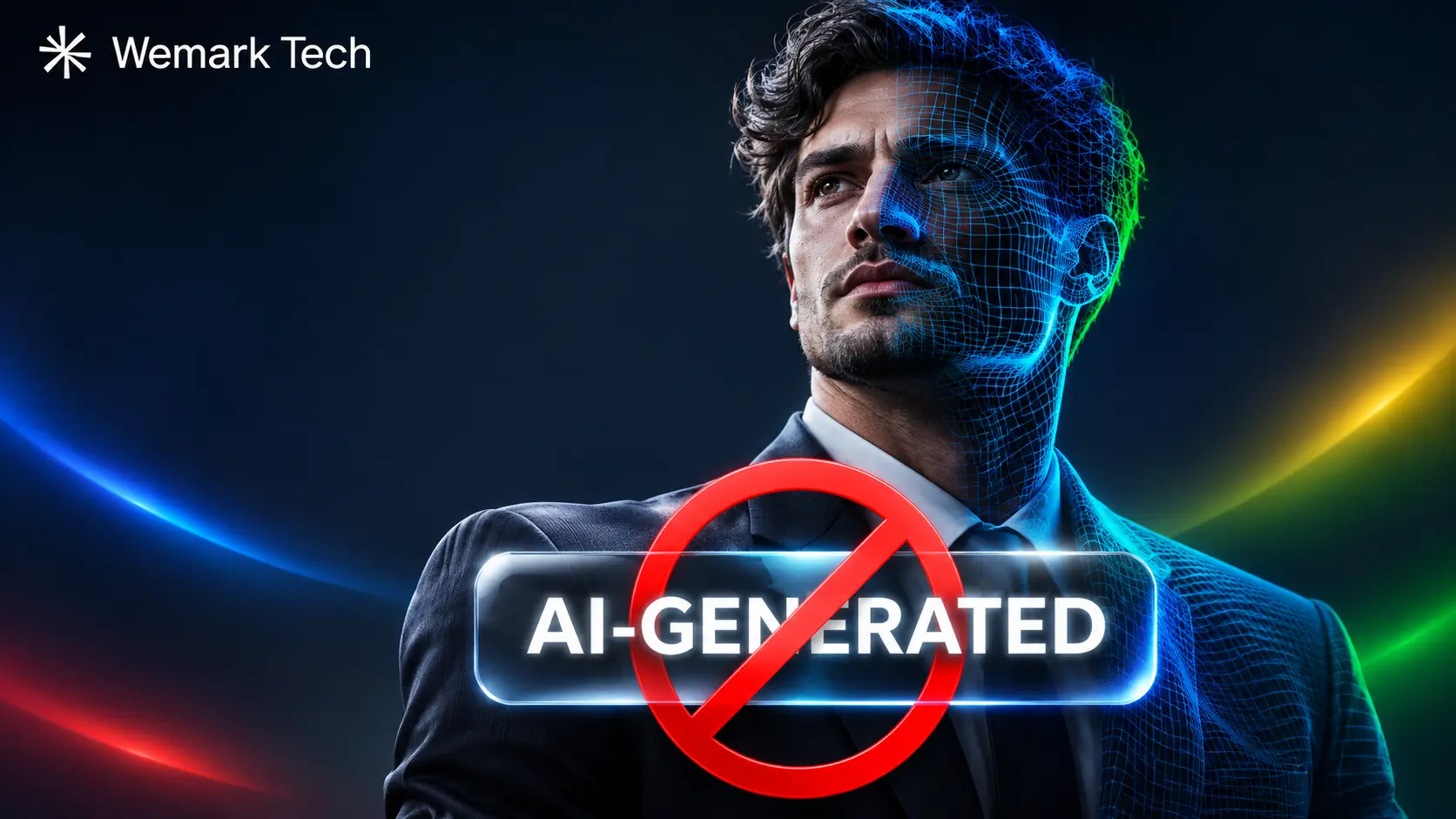
Google has confirmed that an “AI-generated” label doesn’t make an ad that impersonates a public figure acceptable. Here is what changed on 11 November 2026, what it means for your account and what to do about it.
In brief
- On 11 November 2026, Google clarified that ads using AI to impersonate public figures are not allowed, even if the ad discloses the AI use.
- Google says this is a clarification and doesn’t change enforcement.
- Violations of this policy can lead to account suspension without prior warning.
- Audit your creative now, and don’t rely on disclosure labels.
On 11 November 2026, Google posted a short notice in its Advertising Policies Help Centre titled “Updates to Unacceptable Business Practices (November 2026),” as reported by PPC Land. It clarifies that ads using AI to impersonate public figures are not allowed, even when the ads disclose that they were generated or edited with AI.
At Wemark Tech, we help businesses stay visible and trusted on Google, across both organic and paid search, so we see how a single policy issue can affect an entire search presence. This update is worth understanding properly.
What does Google’s update actually say?
The update covers the public figure impersonation section of Google’s Unacceptable Business Practices policy. AuditSocials, which tracks Google’s policy log, rated the change medium severity and noted that no effective date is listed. Google’s own framing is that the clarification is meant to help advertisers understand the policy and does not change how it is enforced.
Google’s policy page now states plainly that AI impersonation of public figures isn’t allowed even with a disclosure. Public figures include government officials, entertainers, athletes, online influencers and prominent business people such as founders or CEOs of big companies.
Is this actually a new rule?
Not really. The policy page already lists AI-generated videos of popular YouTubers used to promote a “get rich quick” scheme as an example of a violation. The notice addresses a narrow point: the assumption that a disclosure label makes an AI-generated celebrity endorsement acceptable. It doesn’t.
It also fits a longer pattern. Google has been tightening its rules on ads that falsely claim an association with, or endorsement by, public figures and brands.
What happens if Google flags your ad?
Google treats violations of this policy as egregious. If it finds one, the account is suspended upon detection and without prior warning, and the policy page states that you won’t be allowed to advertise with Google Ads again. You can appeal if you believe there was an error, but reinstatement happens only in compelling circumstances. A single ad featuring an AI-generated public figure could put your entire account at risk, not just one campaign.
Recovery is also getting harder. In July 2026, Google reportedly stopped allowing appeals of policy decisions more than six months old, with no lead time. Catching a problem early matters more than it used to.
What else did Google change on the same day?
Google also logged “Update to the Personalized Advertising Policy (November 2026),” clarifying that advertisers can’t target users based on an interest in categories that are prohibited in Google’s ad network. If you run personalised campaigns, review your audience targeting alongside your creative.
Why should Adelaide businesses treat paid and organic search as one reputation?
Many local businesses run Google Ads and organic SEO as separate efforts, but customers don’t see them that way. If an ad is disapproved or your account is suspended, your paid visibility can disappear overnight, and you’re left relying on organic rankings.
That’s one reason good SEO services in Adelaide look at your whole search presence rather than rankings alone. A strong organic foundation gives you a safety net when paid campaigns hit a compliance problem, and it keeps your business visible while any ad issues are resolved.
The reverse applies too. Trust signals, honest messaging and credible content help both your ads and your organic results. If you’re comparing an SEO agency in Adelaide, ask how they handle brand safety and policy compliance across both channels, especially now that AI-generated creative is so easy to produce.
It also pays to check which channel is actually moving before you react. Google’s November 2026 core update began rolling out on 10 November, so organic changes this month may have nothing to do with your ads. If you’re deciding how to split budget between the two, our guide to SEO vs digital marketing is a good place to start.
What should advertisers do now?
- Audit your creative. Look for AI-generated or AI-edited video, voice or imagery that resembles a real public figure, including lookalikes and cloned voices.
- Don’t rely on disclosure labels. An “AI-generated” tag doesn’t make impersonation compliant.
- Check agencies and freelancers. Ask whoever produces your creative how they source likenesses and voices, since you carry the account risk.
- Get documented permission. Google’s own best practice is to have consent you can prove before using anyone’s name, image, video or voice to suggest an endorsement. Otherwise, use original characters or actors.
- Monitor policy notices. Watch your Policy Manager and the Help Centre change log regularly, and don’t wait for a grace period.
Google’s own examples help show where the line sits.
Safer creative
- Original characters, or actors you have hired
- A real spokesperson with documented permission
- Accurate claims about what you actually offer
Risky creative
- A well-known person’s name, image or voice used without permission to suggest they back your product
- AI video of an influencer endorsing a “get rich quick” scheme, even with an AI label
- Relying on a disclosure label to make impersonation acceptable
Frequently asked questions
Does labelling an ad as AI-generated make it compliant?
No. Google’s policy says ads that impersonate public figures using AI aren’t allowed even if they disclose the AI use.
What happens if my account is flagged for this?
Under this policy, Google can suspend the account on detection without prior warning. You can submit an appeal, but reinstatement happens only in compelling circumstances.
Is this a new rule?
Google describes it as a clarification, not an enforcement change.
What can a public figure do if their likeness is used without permission?
Google’s policy page says they can report the ad through its reporting form.
Does a Google Ads suspension affect my organic rankings?
Google has said its ads and organic ranking systems are separate, and that ad spend doesn’t influence organic rankings. A suspension takes your ads offline, so you lose paid visibility, while your organic listings remain a separate channel that depends on your SEO.
The takeaway
Google isn’t changing the rule, but it is closing off the argument that a disclosure label makes impersonation acceptable. If an ad depends on a real person’s face or voice that they didn’t approve, assume it’s a risk, whether or not it’s labelled as AI.
If you’d like help strengthening your organic presence and protecting your search visibility, get in touch with our Adelaide SEO team at Wemark Tech.
Sources
- Google Ads policy: Unacceptable business practices
- Google Advertising Policies change log
- PPC Land: AI labels won’t save public figure impersonators from Google Ads suspension
- Search Engine Roundtable: Google Ads disallows impersonating public figures with AI
- AuditSocials: Google Ads AI impersonation and targeting clarifications
- PPC Land: Google Ads ends appeals for policy decisions over six months old
- Search Engine Roundtable: Google Ads spend has no impact on organic rankings
Want your paid and organic search protected?
Tell us what you are running. We will help you check your creative, your ads and your organic visibility are working together.
Get in touch with Wemark Tech